
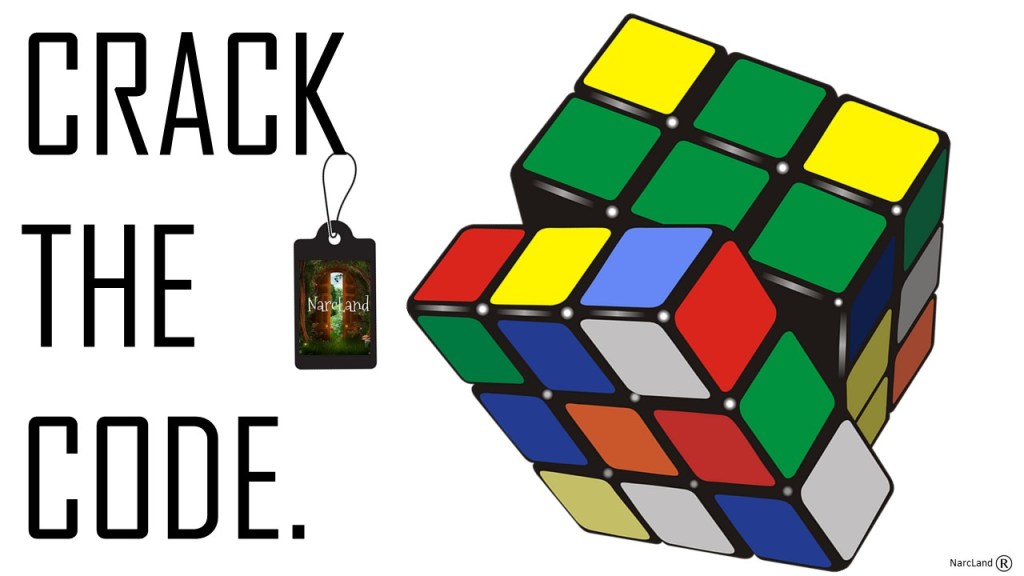
Crack the Code
According to Business Insider, the Rubik’s Cube puzzle has 43 quintillion possible configurations. “Any Rubik’s Cube can be solved in 20 moves, but it took over 30 years for anyone to figure that out” (Kiersz, 2019). Life is equally complex. In fact, there are so many correlations between life and the Rubik’s Cube puzzle. For example, the human-experience shuffles, situations are random and tend to rotate without notice. Unfortunately, life’s configuration can be messy at times. As human beings, we seek to find the answers to which we believe may be the path back to normalcy when we’re faced with life’s challenges. Mathematically, when a problem has no solution, the statement is false. Similarly, in life, when our problems seem to have no solution or resolve, the situation and/or circumstance birth a void. Before we examine how to find our way beyond these “no solution” scenarios, let’s talk about what we experience on the path and journey to a state of perfect happiness (i.e., Nirvana).
The Rubik’s Cube Disposition
The journey to enlightenment is cold, dark and mystifying. The world as you know it is flipped upside down and filled with discord & chaos. Righteous intentions seem wrong, while bad intensions appear to be glorified and revered as righteous. From a cognitive perspective, this reality triggers a Rubik’s Cube disposition. If you’ve ever experienced this sort of disposition, I’m convinced you would agree that the human-experience is organically complex. Knowing this, why do human-beings self-sabotage and work against their best interest? Is it fair to expect a loved one to sacrifice their future, happiness and overall well-being for the sake of your happiness and/or personal agenda? Is it okay to engage in disloyal behavior to those who you proclaim to love? When is it ever appropriate to leverage human-beings as pawns for personal quarrels? If you’re able to rationalize any of the said questions, you are the mastermind who trigger the Rubik’s Cube disposition.
The Dunning-Kruger Effect
“Fools are blind to their own foolishness.” ~Author Unknown~ |
The Dunning-Kruger Effect is a person with limited/basic skillsets, athletic ability, talent and/or knowledge purporting themselves as elite. In other words, it’s a person with a cognitive bias, this person lacks the metacognition (thought process) of their own deficiencies. Some may question the Dunning-Kruger effect’s real significance or why it matters. This cognitive bias causes the affected people to make decisions that lead to bad consequences for them or other people. More importantly, what if the decision has long-term consequences that negatively impact themselves or others?
References
Kiersz, Andy. “Any Rubik’s Cube Can Be Solved in 20 Moves, but It Took over 30 Years for Anyone to Figure That Out.” Business Insider, Business Insider, 18 Jan. 2019, https://www.businessinsider.com/rubiks-cube-gods-number-steps-to-solve-any-cube-2019-1.
Upcoming 2023 Publications
1. How the Mighty Have Fallen
They are waiting.
2. NarcLand
“There are people out there bonding over not liking you.” ~Author Unknown~ |
NarcLand habitants are low vibrational, one-dimensional human-beings with a limited world view.
3. Jealousy & Envy
“A friend to all is a friend to none.” ~Aristotle~ | “I peep game faster than you can run it.” ~Author Unknown~ |
4. The Ecosystem
Identify your tribe and hold them close to the breast.
5. Persevere
Proceed. Pursue. Stand firm.
6. Truth Prevails and Love Wins
“Give people permission to make mistakes and the obligation to learn from them.” ~Author Unknown~
 NarcLand